

The Short Fable of How the Centipede Turned from Round to Flat
According to the fables and legends of the Letu Chin people, fire and water floods occurred during the primordial dawn of the earth. At one point, when the entire world was inundated by a great flood, all kinds of humans and animals gathered together at this Saung So Sone(စောင်စိုစုံး) mountain peak. It is said that the only place not submerged by the flood was an area about the size of a single mat near the mountain peak. In that primordial beginning, the centipede was not flat like it is today; it was round. During that critical time, the centipede bit a pregnant human woman. Seeing this, the great bear grew furious and thought, "How could you do such a thing while all of us, humans and animals alike, are suffering through such a natural disaster?" With that, the bear struck the centipede down with its paw, flattening it completely. And that is the extent of the Letu Chin fable. .........................
While this mountain is famous for being inhabited by fierce spirits, it is located at the headwaters of the Mauk Creek (မောက်ချောင်းဖျား), which empties into the Buddha Kama (Paletwa Township). On the Rakhine State side, it is situated right at the headwaters of the creek known as Pawl Ku. It falls within the Kauk Sin area on one side, and directly below that side lies a very high waterfall. Beneath this waterfall is a massive stone pool that was once highly famous. Although this mountain is not the highest peak in the vicinity of the middle section of the Than Chaung (သံချောင်း), its summit is quite high and steep.
According to oral tradition, both the Letu Chin and their brother tribe, the Hiatui, still tell stories to this day of how a famous hunter once shot a white sambar deer/wild boar at the pool on this mountain peak. Furthermore, some hunters claim that even to this day, they occasionally spot other sambar deer, barking deer (muntjac), and wild boars in rare white coats. However, it is said that not everyone is able to see them.
These are just some of the unique events between humans and centipedes from the legends of Saung So Sone, along with some distinctive features of the mountain.
Aung Myint
June 9, 2023
#SaungSoSone #Centipede #LetuChin #ChinRakhineBorderLine
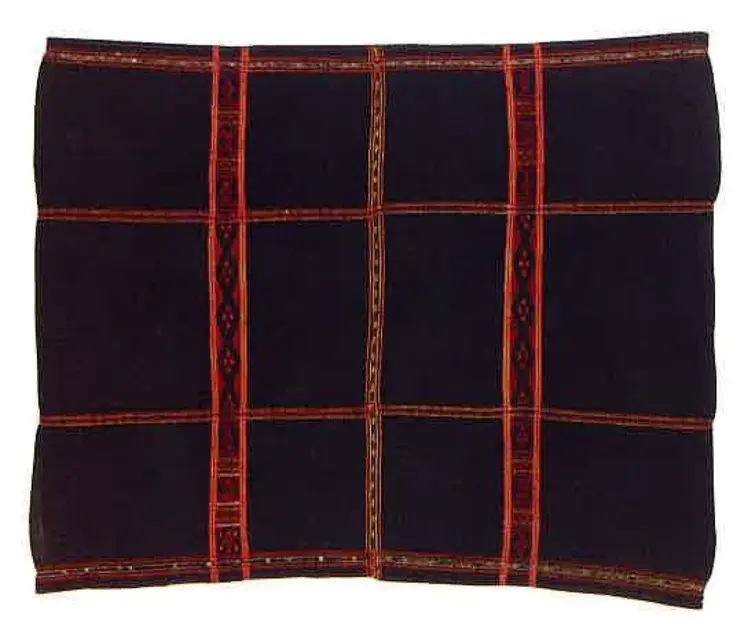
Hodëp image
A Glimpse into Hodëp and Ponpya of the Trendsetting Letu Chin Women
Letu Chin women proudly wear a traditional short sarong (skirt). This is not something worn exclusively during traditional festivals; they wear it during ordinary times as well, though it is given special priority during festive occasions.
The traditional skirt they wear is called Hodëp and Ponpya. In reality, Hodep and Ponpya cannot be separated from one another. However, the pieces from the eastern and western sides must be fastened and worn together using a belt made of copper or brass, known as a Kikki. Therefore, Hodëp, Ponpya, and Kikki form a single, complete set. I will explain each of them briefly and concisely.
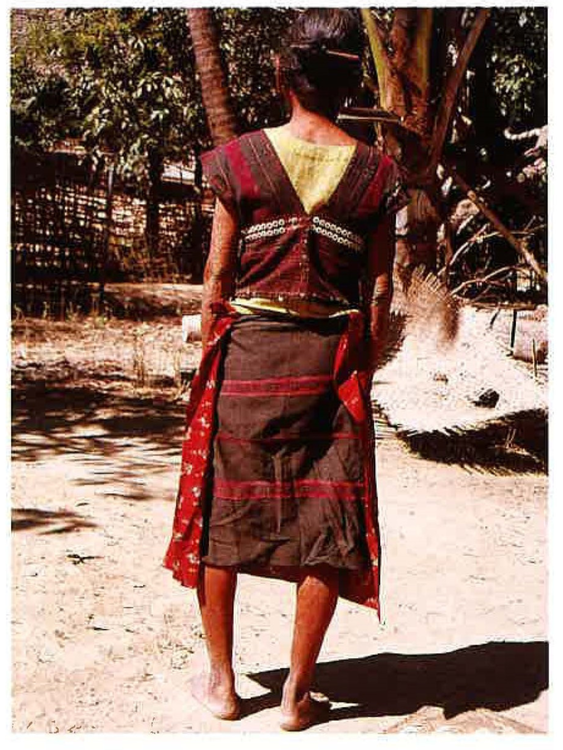
Backward of A Hodëp
(1) Hodëp
Hodëp refers to the fabric woven from traditional cotton and yarn that forms the back section of the skirt. It features a black background with a few red stripes, as well as intricate, traditional patterned grids. When it is not being worn and is simply hung up to dry, some might even mistake it for a towel. Because of this, the Hodëp cannot be stitched into a tubular sarong shape; if it is stitched, it is no longer considered traditional. Its length reaches just around the knees, and when sitting down, it usually rests slightly above the knees.
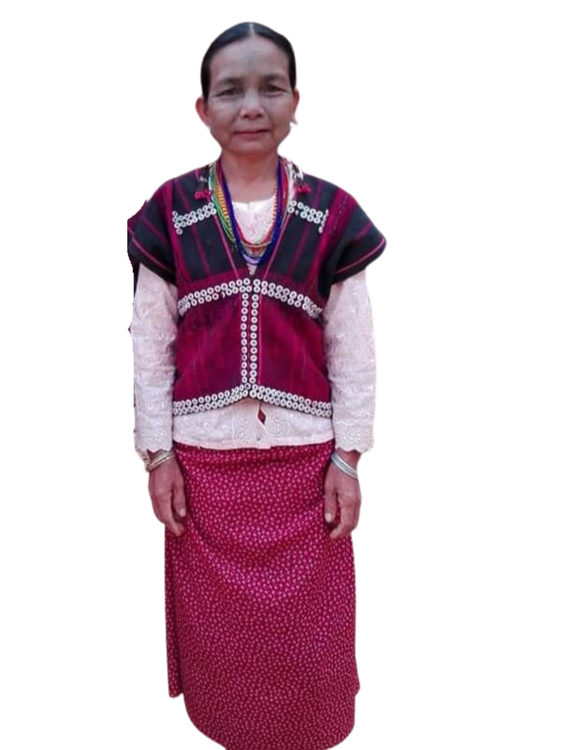
A Lay in Her Khrangim, Hodép and ponpya
(2) Ponpya
Ponpya refers to the Burmese fabric that forms the front section and is worn together with the Hodep. Specifically, fabric with a reddish tone and small dot patterns must be chosen. Although this particular fabric is not traditionally woven, it still cannot be stitched together. They either buy standard women's sarong material and cut it as needed, or use it just as it is. The fabric is cut and adjusted according to the body proportions of the girl.
Since the Hodëp and Ponpya are separate pieces for the front and the back, the question arises: how exactly do they wear them? This will be explained below.
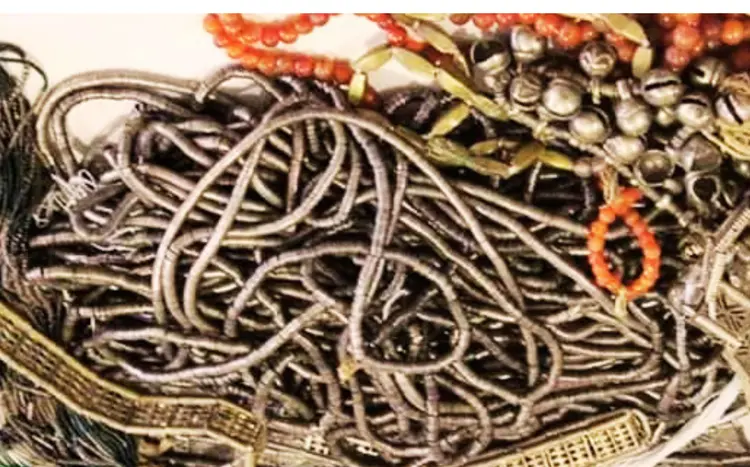
A Kikki is Used When Wearing Hodëp & Ponpya
(3) Kikki
Since the Hodëp and Ponpya are separate pieces for the front and the back, Letu Chin girls wear them by wrapping them around the waist with a brass or copper cord called a Kikki. This Kikki is made of small copper or brass rings about the size of a thumb or a pinky finger. These rings are strung together using high-quality cotton thread—consisting of 6 to 7 twisted strands that match the thickness of the ring size—much like how jasmine flowers are strung with thread. The cord has to be long; it must be long enough to wrap around a girl's waist at least 4 to 6 times. Since it is made of metal, it is quite heavy—heavier than a regular man's belt.
The Hodëp and Ponpya attire closely resembles the modern skirts worn today.
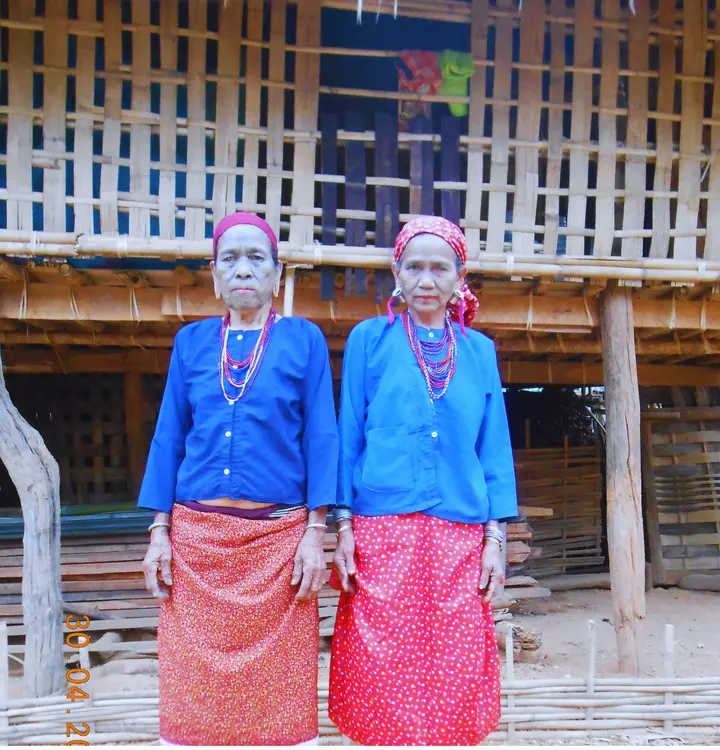
The Front of A Ponpya
Nowadays, some modern women's sarongs and skirts worn for attending events are not stitched at all; they are simply wrapped and worn just like that.
Furthermore, the office attire worn by women in corporations includes fairly short skirts, adapted to modern trends and the specific requirements of the corporate workplace. They look neat and are comfortable to look at.
Back when we were teenagers around 2004, seeing someone wearing such a short skirt felt very unusual or like a bold, "hot" trend. However, this style of dressing has simply become the style of the era. On the other hand, Hodëp and Ponpya have been worn by our Letu Chin women and mature young girls for hundreds of years. Therefore, skirts are nothing new or unusual to young Letu Chin women who know their own traditional heritage. To them, a modern skirt is simply a contemporary fashion that does not require separate front and back pieces, nor does it require a Kikki.
There is one more thing to mention. When some young women nowadays wear short skirts, they often face accidental mishaps when sitting down or standing up. However, Letu Chin women wearing Hodëp and Ponpya are incredibly neat and graceful when they sit and stand. Even though the front and back pieces are completely separate, they remain exceptionally modest and secure. Moreover, the historical absence of sexual harassment within the Letu community is a true point of pride for the Letu Chin ethnic group in this modern era.
In the future, I hope to see Hodëp and Ponpya designed not as separate pieces, but as a single, combined piece in a modern style. The Kikki can still be worn around the waist as usual for adornment during festivals. At other times, the modern Hodep and Ponpya would be separate only in name while being a single, continuous skirt. This would certainly make it neater, as well as safer and more beautiful in line with modern needs.
Photos taken from the Mantels of Merit are credited.
Xm Khing
15-10-2023
Letu Hyju Suiqsawklhiq Suiba Khrawng
Tuqkuawkra-a, 2011 nhu lamma, Letu hyjulhiq poqcai khrawng "Hyju Khonhxplhiq, a cyj khonhxp langlhiqa, thumcen suiqsawklheq an khoqbawqawi khrawng a mhu-ui laqtiq a khxtta a bji.
Sinahacä, hjmma tawqawi cjntiq thumcën suiqsawk phëmlhiq sample mji tiyaq khencuvjng suiqsawk tha yxyanglhiq tawk thequna an khoqoi khrawnglheq a mhu-ui laq khrawng a nxtcaknaw pha. Ni suiqsawklheq khrawng "hjm mjngkxq suiqsawklhiq jng tu-ui yaq. Putaw suiqsawkka yoi a pui khennjng Karen yxyanglhiq themcën suiqsawklhiq an ljuqve. Pjnnjngce, putaw suiqsawk na mhutaw suiqsawk mhaw thequna an khoqbawqawi khrawnglhiq ha a mhu-ui laq khrawng lungbong pawiyi naw khoq yaq.
Ni baw Letu hyju thumcën siyaq tiq suiqsawklheq khoqoi thequna Letu hyju yx suiqsawk tiyjng mhawn yaq cek a hawuve khrawnglheq a mji khencuvjng ni baw thonne laq tiq a si. Pumhaw yxyang na pumhaw thumcën lheq jng soilhëngetiq poqcai khrawnglhiq han yunne laq äq khrawng cä, "Thumcën mhaw laq yju, thumcën tha poqcai laq yju, hjm thumcënlhiq suiba theqna record a poqcaiye laq äq,"nawk khrawng lungbong dukka tawkke theq ai a lx. A mhawnna nawkhxcä, ni bawng yxyang thumcën njng soilhëngetiq lheq khrawng pumhaw yxyang tokka Cawpe na Thumcën Poqcaitiq organization khrawng a lhyjya an poqcai yaiya a tawnne tyä. Mhawnyaqtiq na ni baw innovations poqcai khrawnglheq këmpaw kung mjitiq ni baw khokumlhiqa mhawnmxtiq hihi thumcën suiqsawklhiq mhui dang ti hxcä, lennu cangpawlhiq, hjm canglhiqa cet theqna nhiqmin khrawng a khxtta a bji. ni cä, research luq si theqna hjm mjngkxq thumcënlhiq na sawk khrawng imlhiq, suiqsawklheq sawngnge khrawng nga a thonne. Tuqa hjmcanglheqa nhiqmin nai ha hëng ti yju uq khencuvjng nhiq ai laq ti yaq. Khlawng sawk nawk khrawng cä ivëk ha kau yju an dx laq. A cyä vawng hawt lam macä civilized society ya han hëng khencuvjng khlawnglhiq jng soilhëngetiq suiqsawk, khoqbawqawi khrawng lheq Museumlhiq na Library lheqa cxm pet khrawng lhiq a mji. Jn njng tuqa, Letu hyju suiqsawk photos lhiq online ngjngkxq laqaitiq mëqcaw a mji, a dawn nga a dawnne.
၁။ ကျားဝတ်အင်္ကျီ(Khrangim)
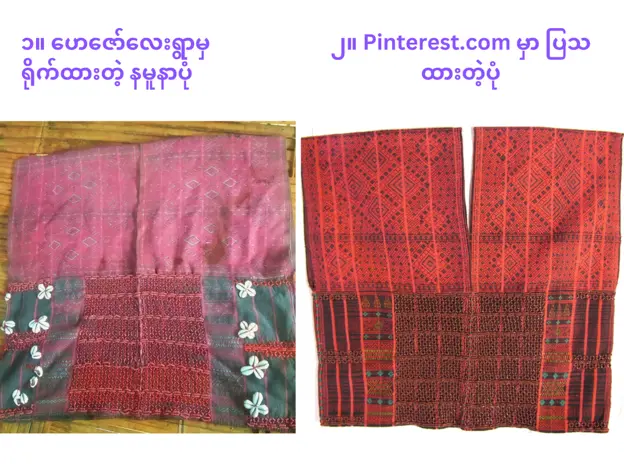
Putaw phang ngä khrawngim tina an hawu. Ni suiqsawk a tha tawkba-ai a khawt tiyjng a yaw-awilaq. Ni phang tawq hxva, a lhyjya kut yung a lx tiyjng a yaw-awi laq. A cyä u nghawt cä, phang ngjng puitiq vawngla lhiq mji yju vjng a soilhënge. Pawitiq bok, seng, këng, etc...lheq na elung lhiq laq ai khoq yaq.

American somdekka langdjtiq Philadelphia Museum of Art ta Letu hyju thumcën suiqsawk cxm theqna a dawnne khrawng a khomme laq. Niya lonhxttiq khokum 1920-1950 bawng nga tawkketiqa a thonne tina a yo-oi. Tuqa nawkhxcä, khokum (98) kum bawng nga a diu hxq. Tuqa tawkketiq jng/dj a tui-ui kat. Nhetiq nacä "khrangim"tiyjng an yok, sinha Pinterest na a yok khrawng cä putaw suiqsawk na mhutaw suiqsawk hjiq u nhiq djn a dawnne khrawng a khomme laq.
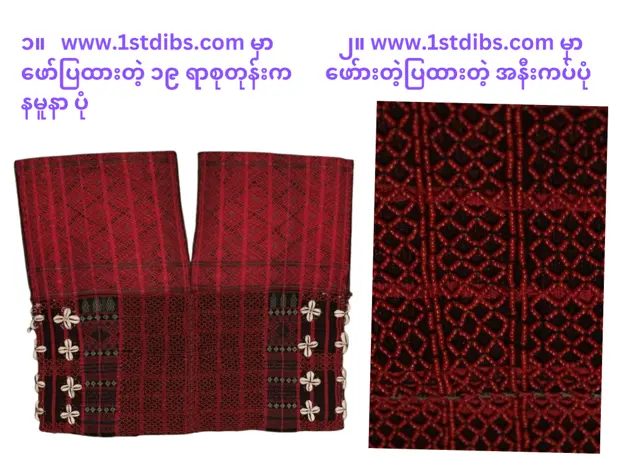
Ni Woman's Tunic Laytu from Minbyar Township, Burma, circa 19th Century For Sale at 1stDibs yaha 19 century lhiqa tawkketiq khrangim khrawng mhutaw suiqsawk tiyjng mhawn yaq kaw an yok
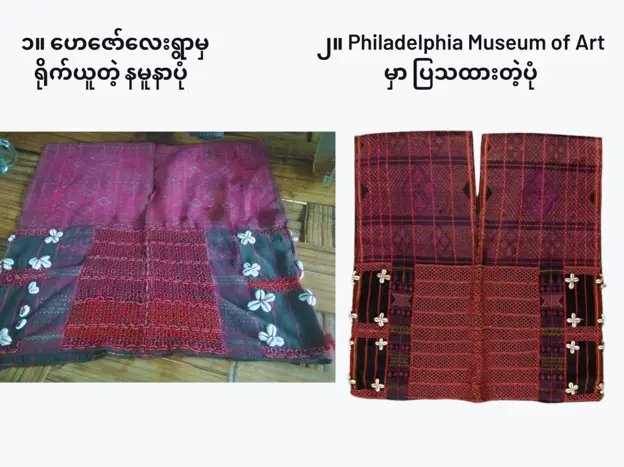
၂။ မဝတ်အင်္ကျီ(khranhën)
Mhutaw khoqoi khrawng khrawnghën tiyjng an hawu. Silk bok, sen, jiqljm lung, pjnnjng cä, ceramic art tjng poqoitiq phangcik lhiq ha an thun. Tuq khet ta cä, ni bawng vanlalhiq mji tiyaq khencuvjng simx yaqtiq(atuq)lhiq dj an summä hxq. Tuqa nam lamma(sjmlong) ni suiqsawk hjm mjngkxq bawtjngnga an tawqba khoq hxq. jiljm lung lheq pjtdj a lxi ham/hxq. A dawn nga dawn khrawng cä mëqcaw khetpawva tawkke tiqa a thonne. Hjm mjngkxq bawtjngnga an tawqba khoq hxq tyä, sinaha lap nghawt tjng 250.000 mmk bawng nga an tong tiyjng a yaw-awi laq.
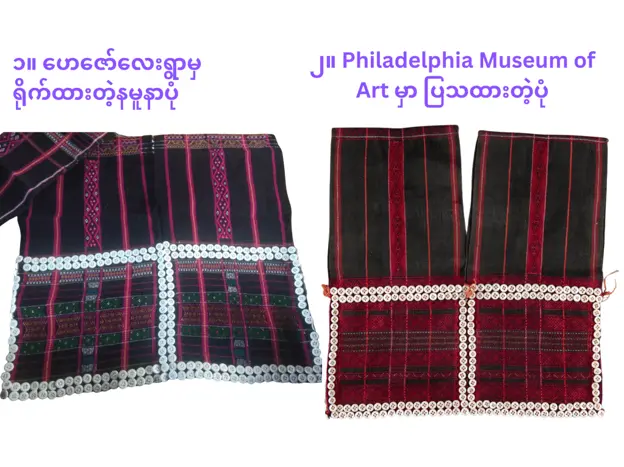
Letu hyjulheq tok hjm mjngkxq bawtjngnga khrangim na khranhën lheq tawq ba-ai a lx nawk khrawng pjpjiqna nxtcak kai a lx.
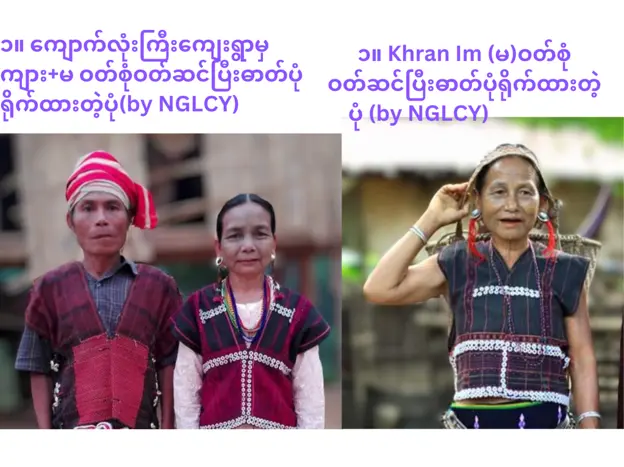
Letu hyjulheq suiqsawk: putaw phang Khrangim na mhutaw phang khranghën lheq khrawng hjm mjngkxq bawkungnga tawkba-ai a lx tiyjng hawu dang ka ti.
#လေးတူချင်းရိုးရာဝတ်စုံများ
#khranhën #khrangim #letuchin
Letu Chin Traditional Naming Customs for Newborns
When a child is born, the Letu Chin people strictly adhere to the following four rules when naming the newborn:
-
The father's name must be included.
-
Only names from one's own lineage (clan) must be reused.
-
Names consist fixedly of only two words.
1. Mandatory Inclusion of the Father's Name
Including the father's name is an indispensable custom that the Letu people must follow. The father's name is appended right after the child's given name. Even in cases where a child is born without a father present (due to an accident or if the father is unknown), the mother will couple the child's name with the name of a man she wishes to use as a reference.
Examples:
-
Thawng Hnet (Male): The given name is "Thawng," and "Hnet" is the name of his father inserted into his name.
-
Bawi Hnet (Female): "Bawi" is the given name, and "Hnet" is the father's name.
Therefore, as soon as a Letu person hears someone’s full name, they instantly know whose son or daughter they are. There is no need to ask about their lineage.
2. Reusing Names Only from One's Own Lineage (Clan)
Although there might be exceptions, the Letu Chin people do not usually adopt unusual names or names from other clans' lineages. Looking at both examples above, both names are taken from their own ancestral lineage. That said, there are also some common names that are shared and used across different lineages.
3. Maintaining a Fixed Two Word Based Name
If you look at the examples above, you will notice that both males and females have names consisting of only two words. This is one of the features that makes the Letu people completely unique.
When naming a child, it is usually the father’s father (the grandfather) who bestows the name. However, if the newborn's grandfather is no longer alive, the father himself will give the name.
Finally, it is worth noting that the Letu people do not use Uppu (Chin) names or names from the "Vet" (also known as Maya Chin or Daai/Dai). According to their beliefs, names serve to distinguish them from other ethnic groups. Because of this, elders (aged 50 and above) can instantly identify a name upon hearing it, recognizing it immediately as a "Daai name or Uppu name," for example.
The points written here represent the naming custom system from among the traditional customs of the Letu Chin people. Nowadays, some people have started incorporating religious names, but the father's name is still conventionally included as always.
Xm Khing
July 1, 2023
#Letu #Chin #methodofnamegiving
